Stop Letting Michigan Winters Wreck Your Lawn
Michigan winters are tough on natural grass, especially in West Michigan. The snow finally melts, and instead of a green, ready-to-use yard, many people see mud, ruts from snowplows, and tired, patchy grass. Lawns stay soggy for weeks, and every step leaves another footprint or muddy paw print.
That mess is not just ugly; it makes your space hard to use. Kids cannot play, pets bring dirt inside, and business entrances look worn just when people start getting outside again. The good news is that you are not stuck with this pattern every spring. With a well-designed synthetic turf system, you can manage water, protect the surface, and keep outdoor areas looking clean and usable much earlier in the season.
In West Michigan, lake-effect snow, frequent freeze-thaw swings, and clay-heavy soils all team up to create drainage problems that keep coming back. We design synthetic turf systems that are built for this reality. Our goal is to give you a surface that works with Michigan’s four seasons, not against them.
How Michigan’s Freeze, Thaw Cycle Destroys Natural Lawns
When temperatures bounce above and below freezing, your lawn goes through a rough cycle. Water in the soil freezes and expands, then thaws and contracts. That constant movement pushes the ground up and down, leaves bumps and dips, and compacts the soil.
Here is what that does to natural grass over time:
- Freezing wet soil squeezes and breaks fine roots
- Thawing leaves pockets and low spots that hold water
- Compacted areas block air and drainage
- Bumpy ground becomes harder and less safe to walk or play on
Those low spots turn into mini ponds when snow melts. Water hangs around at the surface instead of soaking in. Grass roots sit in cold, stale water and start to suffocate. As things dry, you are left with bare patches, mud, and thin, weak turf.
Winter traffic makes this worse. Snow blowers, plows, parked cars, and even walking across frozen, saturated grass can crush roots and create ruts. You usually do not see the full damage until the snow is gone, and by then the lawn is already struggling.
- Many people try to fix it with:
- Spring overseeding Aeration
- Topdressing with compost or soil
These steps can help, but in heavy West Michigan soils with constant freeze and thaw, they often only mask the problem for a short time. By the next spring, the same wet, uneven, muddy spots show up again.
Why Synthetic Turf in Michigan Handles Water Better
Synthetic turf in Michigan works best when it is treated like a full system, not just a layer of green material. Under the surface, there is a lot going on to move water away and keep things stable.
A professional turf system usually includes:
- Permeable turf that lets water pass through
- Infill that supports the fibers and helps with drainage
- Engineered base layers that are graded and compacted
- Edge details that keep the base in place and channel water
Instead of water sitting at the surface, it passes through the turf, down into the base, and then moves away. High drainage rates and smart grading help handle sudden snowmelt and heavy spring rain. This is especially helpful in West Michigan, where quick warm-ups can turn deep snow into a lot of water in a short time.
A quality installation also thinks about frost heave. By building the base correctly, with the right materials and compaction, we reduce movement under the turf. That helps the surface stay level and firm, even after years of freeze and thaw. The result is a safer, more predictable space for kids, pets, and guests.
Beating Mud, Ruts, and Patchy Spring Lawns with Turf
Not every part of a property struggles the same way. There are certain spots that almost always act up in spring, no matter how much care you give them. Synthetic turf can be especially helpful in those problem areas.
Common trouble zones include:
- High-traffic walkways between doors, driveways, and patios
- Dog runs and side yards that never fully dry out
- Shady areas where grass is always thin and muddy
- Play areas that turn to dirt and then to mud
- Busy commercial spaces that get constant foot traffic
When these spots are built with synthetic turf, they stop turning into mud pits. No more bare patches that grow wider every year. No more ruts from equipment or well-worn paths where grass simply will not come back. Shoes and paws stay cleaner, and you spend less time trying to patch up damage.
Another benefit is how turf looks and feels while natural lawns are still waking up. Synthetic turf systems stay green and consistent from early spring through late fall. Playgrounds and dog parks can open sooner after snowmelt because the surface drains quickly and does not turn to muck. Front yards look summer-ready well before traditional lawns fill in.
Smart Turf Choices for Michigan Lawns, Pets, and Play
Synthetic turf is not one-size-fits-all. Different spaces need different types of surfaces, especially when you factor in Michigan winters and freeze, thaw conditions. That is why we work with several turf options designed for specific uses.
Examples include:
- Landscape turf for front and back yards
- Pet-focused turf for dog runs, kennels, and pet areas
- Sports and training surfaces for workouts and practice
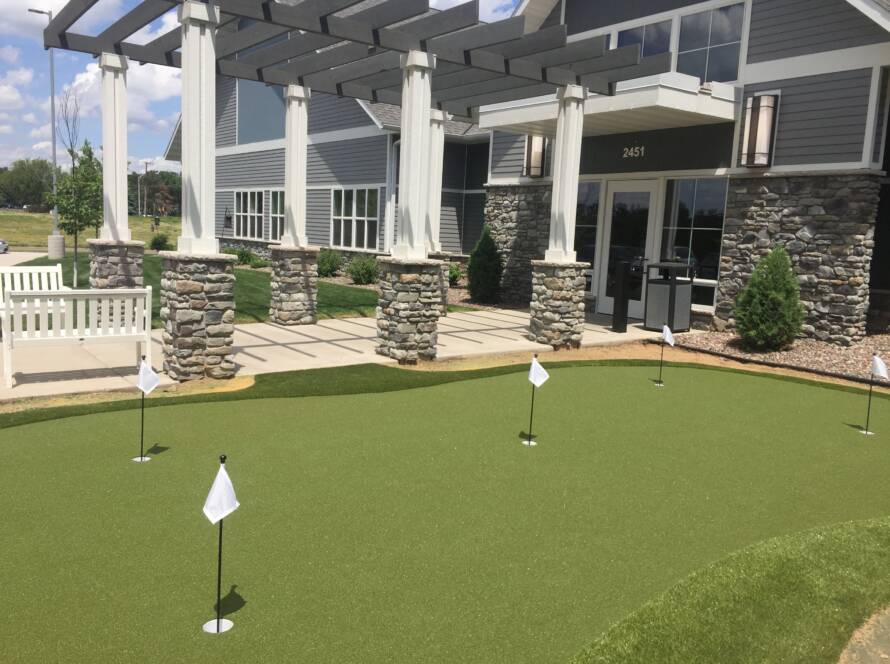
- Golf greens for putting and short-game practice
- Playground systems designed for safer play
Each style is built with performance and durability in mind. Reinforced fibers help the turf stand up to traffic, even when people start using it early in the spring. Advanced backing systems support drainage and help the turf hold its shape. For pet areas, antimicrobial technology helps control odors and bacteria. For playgrounds, shock pads can be added under the turf to create a softer, safer landing surface.
There are also long-term environmental benefits in our climate. Synthetic turf reduces the need for watering during dry spells. It cuts down on mowing, gas use, and noise. You do not need fertilizers or pesticides that can wash into storm drains during spring rains. And with a long product life, you are not constantly replacing materials.
People often ask about winter care for turf in Michigan. In most cases, you can:
- Gently shovel or snow blow with care, avoiding sharp edges
- Use plastic-edged shovels to protect fibers
- Avoid harsh de-icing products directly on the turf
- Brush fibers upright if heavy snow has laid them flat
When the base is built correctly, the system handles winter just fine. Snow will melt, drain through, and the surface will be ready to use again without mud or ruts.
Plan Your Spring-Ready Synthetic Turf Project Now
The best time to think about synthetic turf in Michigan is before you are staring at another muddy spring lawn. Late winter and early spring are ideal for planning. This gives time to look at how water moves across your property, how the soil behaves, and how you want to use the space.
At ForeverLawn West Michigan, we focus on designing turf systems that match our local conditions. We pay attention to West Michigan microclimates, slopes, and base construction that can stand up to many freeze, thaw cycles. With the right planning, your outdoor space can shift from winter-worn to clean, green, and ready for action much sooner, and stay that way for many seasons.
Transform Your Michigan Lawn With Hassle-Free Synthetic Turf
If you are ready to stop battling mud, weeds, and constant mowing, we can help you design a yard that stays green and functional all year. Explore our synthetic turf in Michigan options to see how ForeverLawn West Michigan creates low-maintenance, long-lasting landscapes tailored to your property. When you are ready to talk details, simply contact us and we will walk you through next steps, timing, and pricing so you can move forward with confidence.