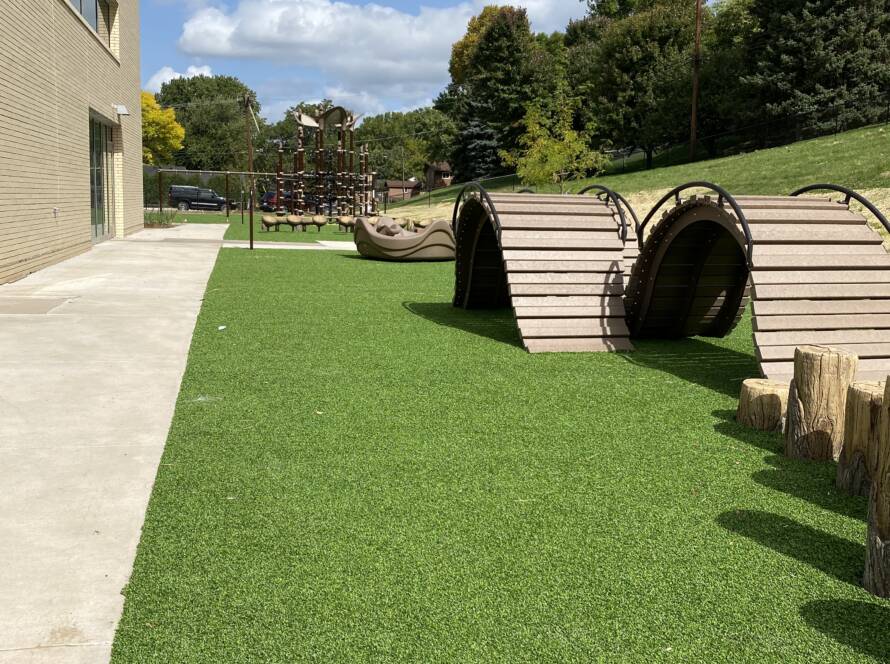
Backyard sports courts are a simple way to get your family outside more often. When the surface is clean, level, and always ready, it is easy to squeeze in a quick game after dinner or a few practice drills before school. With synthetic turf in Michigan, you can enjoy that kind of setup in your own yard, without worrying about mud or worn-out grass.
Natural grass sounds nice for a court, but it rarely holds up to real play. In West Michigan, spring means soft, soggy ground that tears up fast. By fall, many yards have bare spots, ruts, and uneven areas that make play less fun and sometimes unsafe. On top of that, mowing, watering, and line painting take time you would probably rather spend actually playing.
Modern backyard sports courts with synthetic turf help solve those problems. A well-designed system can stretch your playing season, cut maintenance, and give you a consistent surface for everything from casual pickup games to focused skills training. With our local weather, including freeze-thaw cycles, lake-effect rain, and quick swings in temperature, the design and installation matter a lot. That is where a professionally built turf system designed for West Michigan conditions really makes a difference.
Why Synthetic Turf Beats Grass for Backyard Courts
A backyard court only works well if the surface is predictable. Synthetic turf is built over a prepared base that is designed to stay level and drain well. That means less slipping, fewer ankle twists, and a better experience for everyone who uses it.
Here is how turf compares to grass for backyard courts:
- Consistent, level playing surface
- All-weather durability in Michigan seasons
- Lower maintenance and more time to play
With synthetic turf, the base underneath is graded, compacted, and shaped to resist ruts and divots. That steady base helps create safer footing for basketball, pickleball, multi-sport training, or even a batting cage lane. The way the turf grips your shoes makes it easier to stop, start, and change direction without worrying about a slick patch of wet grass.
West Michigan weather can be hard on any outdoor surface. Quality turf fibers and backing are built to handle heavy use, UV exposure, and temperature swings better than natural grass. After rain, the turf surface drains and dries faster, so you are not waiting days to get back on the court. Instead of turning into mud in the spring or dust in late summer, the court keeps its look and feel across the seasons.
Maintenance is another big difference. A grass court needs:
- Regular mowing
- Watering in dry stretches
- Re-seeding worn areas
- Touching up painted lines
With turf, care is mostly:
- Occasional brushing to keep fibers standing tall
- Removing leaves, branches, and debris
- Checking infill levels and edging from time to time
Less yard work means more time for family games, practice sessions, and impromptu tournaments with friends.
Designing the Right Backyard Sports Court for Your Family
The best backyard court is built around how your family actually plays. Before choosing a design, it helps to make a list of your top activities. That might include:
- Basketball or a half-court setup
- Pickleball or short-court tennis
- Volleyball or badminton with an adjustable net
- Soccer skills training, futsal, or footwork drills
- Hockey or lacrosse shooting lanes for older kids
Once you see your top sports, you can think about a multi-game layout. Many families like flexible designs with adjustable nets, removable hoops, and custom game lines. That way, the space can shift from kids’ play to teen training to adult pickup games as interests change.
Yard size and shape play a big part too, especially in West Michigan neighborhoods where lots are all different. Some popular options are:
- Compact half-courts that tuck into a corner
- Longer multi-sport lanes along a property edge
- L-shaped courts that wrap around a patio or pool
- Small practice zones for shooting or footwork only
A well-planned court should feel like part of the whole yard, not just a random pad dropped in the grass. Working around patios, decks, pools, playsets, and existing landscaping can turn your court into the center of an outdoor recreation area.
Surface details also matter. Different turf systems are better suited for different styles of play. For example, a fast, tighter surface may suit basketball and futsal, while a slightly softer feel can work nicely for multi-sport family use. Under the turf, shock padding can help absorb impacts, which is especially helpful if younger kids will be running, jumping, and falling on the court.
Design upgrades can give the space a true home court feel, such as:
- Inlaid game lines for multiple sports
- Color accents or team-themed layouts
- Custom center logos
- Integrated net posts, goal areas, or low fencing
These touches make the court easy to use and fun to look at, so the space draws people outside.
Seasonal Performance of Synthetic Turf in Michigan
West Michigan weather is always changing, so it is smart to think about how a backyard court will perform across the full year. Synthetic turf is built to stay usable in more conditions than natural grass.
During spring thaw and into early summer, turf handles meltwater and rain through its drainage system. Instead of turning into a muddy mess that needs weeks to recover, the surface sheds water and becomes playable again shortly after storms pass. With the right infill and fiber color, some sports turf systems can also feel cooler to the touch on hot sunny days compared to darker, solid surfaces.
As fall arrives, many grass yards start to thin out. Synthetic turf keeps its traction and appearance through heavy use, making it ideal for:
- Soccer and footwork drills
- Three-on-Three Basketball
- Backyard football tosses and routes
- Pickleball and short tennis matches
Players can keep practicing well into the shoulder months without creating bare patches or needing to re-seed.
Winter is a different story. A turf court is not meant to replace a plowed driveway, but it is still low-maintenance. Light snow can often be left to melt on its own. When removal is needed, gentle methods are best. That usually means avoiding metal shovels, sharp tools, or heavy equipment that could scrape or stress the turf and base structure. A good installer will explain safe winter practices for your specific system so it holds up year after year.
Installation Matters with Synthetic Turf in Michigan
The quality of a backyard sports court has as much to do with what you do not see as what you do. The hidden base and drainage system underneath the turf are what keep the surface solid and safe over time, especially with the clay, sand, and mixed soils common around West Michigan.
A proper build typically includes:
- Site evaluation to understand soil, slope, and drainage paths
- Grading and shaping to move water away from the surface
- Compaction of base layers to resist settling
- Selection of base materials sized for the intended use
Sports turf itself is different from basic lawn turf. For athletic use, fiber type, backing strength, infill choice, and any shock pad all affect how the surface feels underfoot, how the ball responds, and how much impact is absorbed when someone jumps or falls. Choosing materials designed for sports, rather than only for looks, helps the court perform better and last longer.
Precise installation details matter too. Clean seams, accurate inlaid lines, and stable edging all help prevent wrinkles, gaps, or trip points as the court settles and gets daily use. Working with a local team means you have support nearby for follow-up inspections, minor fixes, and adjustments after the court has gone through a few seasons of kids, teens, and adults putting it to the test.
Bring Your Backyard Sports Court Vision to Life
A backyard sports court built with synthetic turf in Michigan can turn an underused piece of lawn into the most popular spot at your home. You get a longer playing season, consistent footing, less yard work, and a clean, finished look that stays sharp from spring through late fall. More than that, you are creating a space where family and friends can move, compete, and build skills without leaving the house.
Good planning is the first step. It helps to think ahead about:
- Your priority sports and activities
- Size and layout that fit your yard and neighbors
- Any local rules, permits, or HOA guidelines
- How the court will connect with patios, lights, or other projects
When you are ready to explore options, ForeverLawn West Michigan can walk your property, talk through ideas, and help design a turf sports court that fits your space, your style, and the way your family likes to play.
Get Started With Your Project Today
If you are ready to upgrade your athletic or recreational space, our team at ForeverLawn West Michigan is here to help you plan the right solution. Explore how our synthetic turf in Michigan can deliver consistent performance, durability, and low maintenance for your facility. We will walk you through product options, design considerations, and installation timelines so you know exactly what to expect. Have questions or want a tailored quote? Simply contact us to get started.