Designing Low-Maintenance Lakefront Yards in Michigan
Keeping a lakefront yard healthy in Michigan takes a lot of work. Between sandy soil, water levels, and changing seasons, natural grass tends to struggle right where you want it to look the best. Many homeowners end up with thin, patchy turf, mud near the shoreline, and weekends lost to mowing instead of relaxing.
Artificial grass landscaping in Michigan gives you another option. With the right turf system and thoughtful design, you can enjoy a soft, green space by the water that looks good from early spring through winter, without all the fuss. Our goal is to help you understand why lakefront lawns are so tricky, how synthetic turf solves common problems, and what design choices make a yard feel like a true retreat.
Why Lakefront Lawns Struggle in West Michigan
Lakefront property is beautiful, but it is also tough on natural grass. The same elements that make the setting special can work against a healthy lawn.
Sandy and mixed shoreline soils do not hold water or nutrients very well. Grass roots dry out quickly, so you end up watering all the time and still see bare spots. On the other hand, low areas near the lake can stay soggy and compacted, which also stresses turf.
Seasonal changes add more stress:
- Spring freeze-thaw cycles can heave soil and break roots
- Runoff brings extra water to low spots and worn paths
- Hot, sunny days dry out high-traffic areas near the dock
- Lake-effect snow and ice sit on the same spots every winter
Many lakefront homeowners deal with the same headaches year after year:
- Muddy paths from the house to the dock
- Sand and dirt tracked into the house after every swim
- Constant reseeding, patching, and fertilizing
- A short Michigan summer that gets eaten up by yard work
By the time grass starts to look good, it is often time for fall cleanup again.
How Artificial Grass Excels on Michigan Shorelines
Modern artificial grass is built very differently from what people remember from old turf carpets. Quality systems are designed from the base up to handle water, weather, and regular use, which makes them a strong match for lakefront settings.
A typical synthetic turf system includes:
- A prepared base that helps control drainage
- A layer of stone for stability and water flow
- Turf with a perforated backing so water passes through
- Infill that helps blades stand up and adds comfort
This structure lets rain and runoff move down through the surface instead of sitting on top. On a Michigan shoreline, that means fewer puddles and less mud along the paths people use most.
Artificial grass also holds up well to temperature swings. The fibers are made to handle freeze-thaw cycles without breaking down. UV-stable materials help the grass keep its color under bright summer sun, which is especially helpful in open lakefront yards without much shade.
For waterfront homes, synthetic turf brings some unique benefits:
- Helps control erosion in high-traffic zones near the lake
- Creates clean transitions from house to dock or beach
- Reduces dirt, sand, and grass clippings that wash into the water
- Removes the need for fertilizers and weed killers close to the shoreline
With less soil movement and fewer chemicals, your yard can feel more stable and easier to keep clean all season.
Smart Design Ideas for Lakefront Artificial Grass Spaces
A good lakefront yard design starts with how you actually use the property. Artificial grass gives you a flexible surface that can be shaped to your routines and favorite views.
Some popular layout ideas include:
- A turf “living room” near the water with chairs and a portable fire ring
- A clean, green path from the house to the dock or boat lift
- A lounge zone around a built-in firepit or seating wall
- A play space where kids can run, toss a ball, or set up lawn games
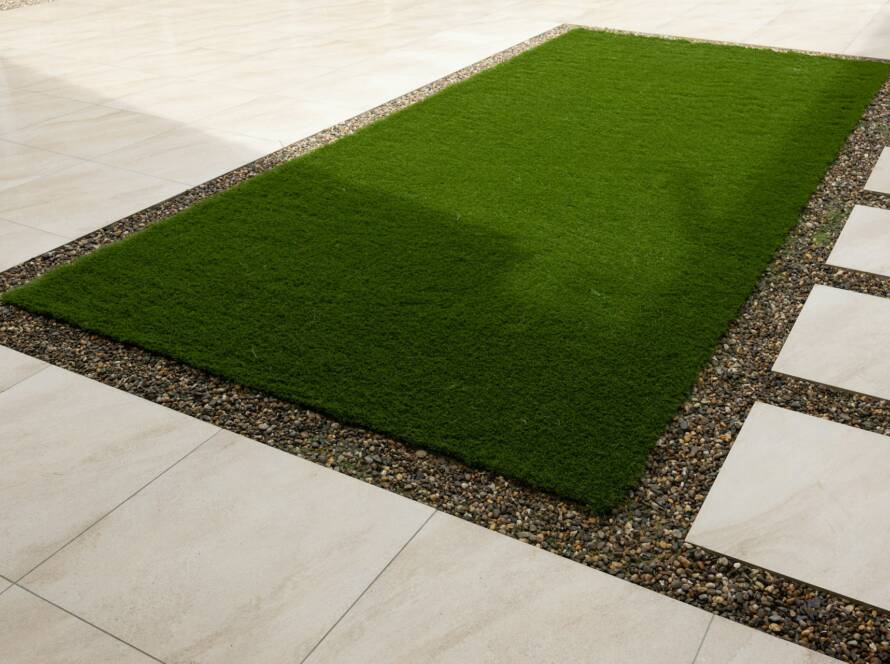
Artificial grass also pairs well with other materials. We can blend turf with pavers, natural stone, composite decking, and native plant beds so the yard looks natural and fits the Michigan shoreline setting. The goal is to keep the beauty of the lake while giving you easy-care spaces for everyday life.
Smart functional details matter just as much as looks:
- Slight slopes that guide water away from the house and toward drains
- Hidden drainage lines in low areas so turf stays usable after storms
- Different turf styles for pet zones, sports or putting areas
- Layouts that protect your best views while keeping access to the water open
With a thoughtful plan, your yard can feel both relaxed and practical, ready for quiet mornings, big gatherings, and everything in between.
Choosing the Right Turf System for Your Lakefront Home
Not all artificial grass is the same. Lakefront properties in Michigan have special needs, so selection should be based on how and where the turf will be used.
Key things to think about include:
- Pile height: shorter blades for heavy-use paths and sports, taller for plush lounging areas
- Softness underfoot: important for play spaces and barefoot time by the water
- Drainage: backing and base design that move water quickly away
- Heat: fiber color and infill that help with temperature on hot, sunny days
- Realism: color blends and textures that look at home next to natural plants and water
Different product lines can match different parts of your yard. A more durable, easy-to-clean turf might be better for dog runs or areas where pets come in and out of the lake often. A performance turf can work well for putting greens or practice spaces. For family play areas, many people want a soft, natural-looking grass that feels good under bare feet.
Quality and safety also matter. Look for turf systems made from lead-free materials, backed by strong warranties, and installed by people who understand West Michigan weather and shoreline conditions. A well-chosen system can stay attractive and comfortable for many years of lake seasons.
Seasonal Maintenance Made Easy in West Michigan
One of the biggest benefits of artificial grass landscaping in Michigan is how simple the upkeep is compared to natural turf, especially at a lake house or cottage.
Seasonal care usually comes down to a few basic steps:
- Spring: clear sticks, leaves, and winter debris, and lightly brush fibers upright
- Summer: rinse areas that get a lot of use, brush traffic lanes if needed
- Fall: blow or gently rake leaves off the surface before they break down
- Winter: let most snow melt naturally, shovel lightly if you need a path, avoid salt
There is no mowing, edging, fertilizing, or weed control. You also skip irrigation start-up in spring and blowout in late fall, which can be a big relief for second homes that are not always occupied.
Homeowners often worry about how turf will hold up over time near the lake. When installed correctly with the right base and drainage, artificial grass is built to handle lake-effect weather, heavy use on weekends, and long periods of rest. The surface stays green and usable even when natural lawns are flooded, frozen, or burned out from heat.
A well-designed artificial grass yard lets your lakefront property work with Michigan’s seasons instead of fighting them, so you can spend more time enjoying the water and less time working on the lawn.
Get Started With Your Project Today
Transform your yard into a green, low-maintenance space with our expert artificial grass landscaping in Michigan services tailored to your property and lifestyle. At ForeverLawn West Michigan, we take the time to understand how you use your outdoor areas so we can recommend the right products and design. Reach out to our team with your questions or to request a quote through our contact us page, and we will help you move from idea to installation.